Show Times
Tuesday 29, September


Wednesday 30, September
Thursday 1, October
Friday 2, October
Saturday 3, October

Sunday 4, October
Monday 5, October
Tuesday 6, October
Wednesday 7, October
Thursday 8, October

Friday 9, October
Saturday 10, October

Sunday 11, October
Monday 12, October
Tuesday 13, October
Wednesday 14, October
Thursday 15, October

Friday 16, October
Saturday 17, October
Sunday 18, October
Monday 19, October
Tuesday 20, October
Wednesday 21, October
Thursday 22, October

Friday 23, October
Saturday 24, October

Sunday 25, October
Monday 26, October
Tuesday 27, October
Wednesday 28, October
Thursday 29, October
Friday 30, October
Saturday 31, October
Sunday 1, November
Monday 2, November
Tuesday 3, November
Wednesday 4, November
Thursday 5, November
Saturday 7, November
Sunday 8, November
Monday 9, November
Tuesday 10, November
Wednesday 11, November
Saturday 14, November
Sunday 22, November
Monday 23, November
Saturday 5, December
Sunday 6, December
Wednesday 9, December

Saturday 12, December
Thursday 17, December
Friday 18, December

Saturday 19, December
Sunday 20, December
Monday 21, December
Tuesday 22, December
Wednesday 23, December
Thursday 24, December
Friday 25, December
Saturday 26, December
Sunday 27, December
Monday 28, December
Tuesday 29, December
Wednesday 30, December
Thursday 31, December
Saturday 23, January
Wednesday 27, January
Saturday 20, March
Wednesday 24, March
Saturday 3, April
Wednesday 7, April
Saturday 24, April
Wednesday 28, April
Saturday 8, May
Saturday 5, June
9 to 5
PGContains material that may not be suitable for children; parental guidance suggested.
In “9 to 5,” a group of female office workers – the all-knowing manager who trained the boss but can't get promoted (Lily Tomlin), a befuddled newcomer (Jane Fonda) and an alluring personal secretary everyone presumes is having an affair (Dolly Parton) – all band together to seek revenge on the man who is making their lives miserable. Directed by Colin Higgins and produced by Bruce Gilbert from a screenplay by Higgins and Patricia Resnick, “9 to 5” received an Academy Award® nomination for the hit title song written and performed by Dolly Parton. Disney will donate net proceeds* from each U.S. ticket purchase to The Dollywood Foundation to support its flagship program, Dolly Parton’s Imagination Library
A Beautiful Mind 25th Anniversary
PG-13Contains language, thematic elements, & some sexual content.
A mathematical genius, John Forbes Nash, Jr. made an astonishing discovery early in life and stood on the brink of international acclaim. But his prodigious career was sidetracked by problems that would have broken many men. Nash, however, fought back. He had always been driven by his quest for one truly original idea and never lost sight of that dream. After many years of struggle, he triumphed over tragedy and literally changed the world. The film is inspired by events in the life of John Forbes Nash, Jr., and in part based on the biography A Beautiful Mind, by Sylvia Nasar. This special 25th anniversary release includes exclusive insight from Leonard Maltin.

Adore Him
PGAll shows are appropriate for all audiences.
ADORE HIM is a new docudrama from the executive producer of the record-breaking and Gabriel Award-winning Jesus Thirsts: The Miracle of the Eucharist (Fathom Entertainment/2024) that aims to inspire deeper devotion to Jesus through Eucharistic adoration. While JESUS THIRSTS presented an overarching focus on the Mass, the sequel ADORE HIM aims to teach and inspire Catholics and seekers about the power of Eucharistic Adoration. ADORE HIM invites you to enter the very presence of God. Through cinematic reenactments that span salvation history and intimate modern-day interviews from around the world, this film explores the transforming power of meeting the Creator of the Universe face to face. From encountering the Ark of the Covenant as it traveled across the wilderness to bumping into Jesus as he taught in the marketplace, this story builds to a culmination in the Eucharist, and today millions are finding out how much God truly loves them as they adore Him in the Blessed Sacrament. He is here. Will you come?
Avengers: Doomsday
PG-13Contains content that may not be suitable for young children and could include mild violence, stronger language and some sexual situations/dialogue. Parents may want to watch with children under the age of 13.
In “Avengers: Doomsday,” beloved heroes from three distinct universes will be set on a deadly collision course and face an existential threat unlike anything they’ve ever encountered.
Avengers: Doomsday 3D
PG-13Contains content that may not be suitable for young children and could include mild violence, stronger language and some sexual situations/dialogue. Parents may want to watch with children under the age of 13.
In “Avengers: Doomsday,” beloved heroes from three distinct universes will be set on a deadly collision course and face an existential threat unlike anything they’ve ever encountered.
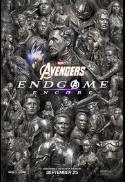
Avengers: Endgame - Encore
PG-13Contains sequences of sci-fi violence and action, and some language.
The epic conclusion to the Infinity Saga returns to theaters as Avengers Endgame: Encore on September 25, 2026. After devastating events wiped out half the world’s population, the remaining heroes struggle to move forward. Ultimately, they must come together to restore order and harmony in the universe and bring their loved ones back in a dramatic showdown against Thanos.
Avengers: Endgame - Encore 3D
PG-13Contains sequences of sci-fi violence and action, and some language.
The epic conclusion to the Infinity Saga returns to theaters as Avengers Endgame: Encore on September 25, 2026. After devastating events wiped out half the world’s population, the remaining heroes struggle to move forward. Ultimately, they must come together to restore order and harmony in the universe and bring their loved ones back in a dramatic showdown against Thanos.
Digger
R**PROPER IDENTIFICATION REQUIRED FOR ENTRY**
The most powerful man in the world embarks on a frantic mission to prove he is humanity's saviour before the disaster he’s unleashed destroys everything. *Any guest under the age of 17 must be accompanied by a parent/guardian (age 21 or older) to enter the theater for this movie. ID required for entry*
Donnie Darko 25th Anniversary
R**PROPER IDENTIFICATION REQUIRED FOR ENTRY**
A troubled teenager is plagued by visions of a man in a large rabbit suit who manipulates him to commit a series of crimes, after he narrowly escapes a bizarre accident. *Any guest under the age of 17 must be accompanied by a parent/guardian (age 21 or older) to enter the theater for this movie. ID required for entry*
Forgotten Island
PGContains animated sequences of scary action, language, rude humor, thematic elements, some violence and brief tobacco imagery.
While celebrating their last night together, Jo and Raissa stumble upon a mysterious portal that transports them to the fantastical island of Nakali, packed with magical and mythological creatures they grew up hearing stories about from their Filipino families. Some of these figures will become friends, some foes. Joined by well-meaning-but- hapless weredog Raww (Dave Franco) and a small-but-mighty pack of pals, Jo and Raissa must face The Dreaded Manananggal (Tony winning icon Lea Salonga), the most feared creature on the island. When they discover that the memories of their entire friendship are the price for returning home, Jo and Raissa will race to find a way to leave the island before they forget each other forever.
Gone with the Wind (2026)
GContains content suitable for all ages.
Clark Gable, Vivien Leigh, Olivia de Havilland and Hattie McDaniel star in this classic epic of the American South. On the eve of the United States Civil War, rich, beautiful and self-centered Scarlett O'Hara (Leigh) has everything she could want—except Ashley Wilkes (Leslie Howard). But as the war devastates the South, Scarlett discovers the strength within herself to protect her family and rebuild her life. Through everything, she longs for Ashley, unaware that she is already married to the man she really loves (Gable)—and who truly loves her—until she finally drives him away. Only then does Scarlett realize what she has lost … and decide to win him back. Considered one of the greatest classic American movies, Gone With The Wind won 10 Academy Awards, including Best Picture, Best Actress and Best Supporting Actress, Hattie McDaniel, the first Oscar awarded to an African-American actor. This special release includes exclusive insight from Leonard Maltin.
Heart of the Beast
PG-13Contains content that may not be suitable for young children and could include mild violence, stronger language and some sexual situations/dialogue. Parents may want to watch with children under the age of 13.
After a harrowing plane crash, Special Forces officer James Belmont (Brad Pitt) and his combat dog, Odin, find themselves stranded deep in the Alaskan wilderness. Together, they are forced into a brutal fight for survival against the elements. From acclaimed filmmaker David Ayer, Heart of the Beast is an intense adventure thriller that explores the unbreakable bond between a man and his best friend as they face their greatest battle yet.
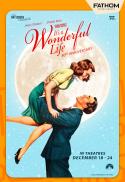
It's a Wonderful Life 80th Anniversary
PGContains mild thematic elements & violence.
Embraced as a cherished holiday tradition by families around the world, Frank Capra’s heart-warming masterpiece now celebrates 80 years with this big-screen event. George Bailey (James Stewart) sets aside his dreams of world travel to run his father’s small community bank, and protect the people of Bedford Falls from greedy businessman Mr. Potter (Lionel Barrymore). When a costly mistake pushes George to the brink of despair, a visit from a kindly angel (Henry Travers) will show George how the life of one good man can change the world forever. This special 80th anniversary release includes exclusive insight from Leonard Maltin.
Other Mommy
R**PROPER IDENTIFICATION REQUIRED FOR ENTRY**
Bela, an 8-year-old girl living in a home with marital problems, confronts a sinister entity that comes out of her closet. The presence, whom she calls "Other Mommy," becomes increasingly threatening to her and her family. *Any guest under the age of 17 must be accompanied by a parent/guardian (age 21 or older) to enter the theater for this movie. ID required for entry*
Pan’s Labyrinth 20th Anniversary
R**PROPER IDENTIFICATION REQUIRED FOR ENTRY**
In post–civil war Spain, 10-year-old Ofelia moves with her pregnant mother to live under the control of her cruel stepfather. Drawn into a mysterious labyrinth, she meets a faun who reveals that she may be a lost princess from an underground kingdom. To return to her true father, she must complete a series of surreal and perilous tasks that blur the line between reality and fantasy. *Any guest under the age of 17 must be accompanied by a parent/guardian (age 21 or older) to enter the theater for this movie. ID required for entry*
Pan’s Labyrinth 20th Anniversary 3D
R**PROPER IDENTIFICATION REQUIRED FOR ENTRY**
In post–civil war Spain, 10-year-old Ofelia moves with her pregnant mother to live under the control of her cruel stepfather. Drawn into a mysterious labyrinth, she meets a faun who reveals that she may be a lost princess from an underground kingdom. To return to her true father, she must complete a series of surreal and perilous tasks that blur the line between reality and fantasy. *Any guest under the age of 17 must be accompanied by a parent/guardian (age 21 or older) to enter the theater for this movie. ID required for entry*
Practical Magic 2
PG-13Contains some violent content, suggestive material, and brief strong language.
Starring Sandra Bullock and Nicole Kidman, Practical Magic 2 returns to a world steeped in moonlit mischief and powerful ancestral magic, as the Owens sisters must confront the dark curse that threatens to unravel their family once and for all in a must-see cinematic event of fun, magic and mayhem.

Reelz Unrevealed (10/5/2026)
PG*RATED PG*
Introducing Reelz Unrevealed at Compass Cinema 6, where you can see any unreleased movie for the first time before opening day FOR JUST $5 PER TICKET, but there is a catch.... NEITHER OUR STAFF NOR YOU KNOW WHAT MOVIE IS PLAYING UNTIL SHOWTIME! The only available information is the rating, runtime, and genre.
Resident Evil
R**PROPER IDENTIFICATION REQUIRED FOR ENTRY**
From the mind of visionary filmmaker Zach Cregger (Weapons, Barbarian) comes a thrilling — and terrifying — reinvention of the Resident Evil franchise. In an all-new story, Resident Evil follows Bryan (Austin Abrams), a medical courier who unwittingly finds himself in an action-packed, non-stop race for survival as one fateful, horrifying night collapses around him in chaos. *Any guest under the age of 17 must be accompanied by a parent/guardian (age 21 or older) to enter the theater for this movie. ID required for entry*

Rocky 50th Anniversary
PGContains mild language, light sexual references, and moderate fight scenes.
Rocky Balboa, a small-time boxer, gets a supremely rare chance to fight heavy-weight champion Apollo Creed in a bout in which he strives to go the distance for his self-respect.
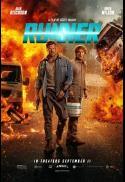
Runner
PG-13Contains strong violence, bloody images and some language.
A former soldier (Alan Ritchson) is thrown into a brutal race against time when a critical medical delivery makes him and his unlikely partner (Owen Wilson) the targets of a ruthless cartel. As the mission spirals into a deadly manhunt, every detour, delay, and bullet pushes them closer to failure. With betrayal closing in from every side, they must survive the chase and deliver their cargo to save the life of a little girl.
Spider-Man: Brand New Day
PG-13The classification was awarded for Contains sequences of action/violence and some language.
It's a BRAND NEW DAY for Peter Parker. Fighting crime full-time as Spider-Man in a world that doesn’t remember him -- and the pressure of seeing his old friends move on without him -- sparks a change in Peter he may not have the power to control. But that transformation might also be the only thing that can stop a shocking new threat to the city and those he loves - a powerful villain no one can even see. The world may have forgotten Peter Parker, but he hasn’t forgotten them.
Street Fighter
PG-13Contains violence/action, bloody images, strong language, sexual references, partial nudity, and brief smoking.
Set in 1993, estranged Street Fighters Ryu (Andrew Koji) and Ken Masters (Noah Centineo) are thrown back into combat when the mysterious Chun-Li (Callina Liang) recruits them for the next World Warrior Tournament: a brutal clash of fists, fate, and fury. But behind this battle royale lies a deadly conspiracy that forces them to face off against each other and the demons of their past. And if they don’t, it’s GAME OVER!
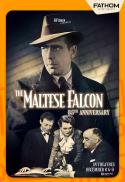
The Maltese Falcon 85th Anniversary
NRContains mature themes, drinking, & smoking.
Academy Award winner Humphrey Bogart stars in this classic film noir as tough San Francisco private detective Sam Spade in the classic, convoluted story of Spade's involvement with a deadly band of international thieves who will lie, double cross and murder to obtain a small, jewel-encrusted statue known as The Maltese Falcon. Sam Spade's (Bogart) partner, Miles Archer (Jerome Cowan), accepts a job protecting a young woman (Mary Astor). Neither Spade nor Archer believe the woman or the story she tells them, but they do believe her money. Then, when Archer is murdered, Spade's search for the killer drags him in the web of lies and death spun by the desperate people seeking The Maltese Falcon. This special 85th anniversary release includes exclusive insight from Leonard Maltin.
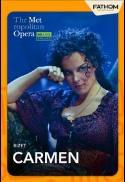
The MET Opera: Carmen Encore (2026)
NRAll shows are appropriate for all audiences.
Richard Eyre’s beloved production of Bizet’s masterpiece returns to theaters, led by mezzo-soprano Elīna Garanča as the title character and tenor Roberto Alagna as Don José in the indelible 2010 Met performance—a fan favorite of The Met: Live in HD series. Yannick Nézet-Séguin conducts in his company-debut season.
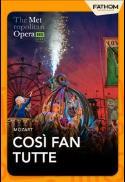
The MET Opera: Così fan tutte (2026)
NRAll shows are appropriate for all audiences.
The Met: Live in HD season continues with Mozart’s satirical comedy of fickle young love. Phelim McDermott’s “colorful, inventive” (The New York Times) staging, inspired by Coney Island in the 1950s, sets the uproarious story at a boardwalk amusement park, where the two pairs of lovers at the heart of the tale find themselves on one emotional—and literal—thrill ride after another. Soprano Federica Lombardi and mezzo-soprano Samantha Hankey sing Fiordiligi and Dorabella, opposite tenor Duke Kim and baritone Andrey Zhilikhovsky as Ferrando and Guglielmo. Bass-baritone Gerald Finley reprises his portrayal of the cynical Don Alfonso, with soprano Ana María Martínez as the witty maid Despina. Make sure to inquiry about our Live Dining Intermission Special!
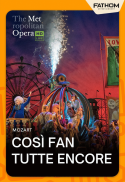
The MET Opera: Così fan tutte Encore (2026)
NRAll shows are appropriate for all audiences.
The Met: Live in HD season continues with Mozart’s satirical comedy of fickle young love. Phelim McDermott’s “colorful, inventive” (The New York Times) staging, inspired by Coney Island in the 1950s, sets the uproarious story at a boardwalk amusement park, where the two pairs of lovers at the heart of the tale find themselves on one emotional—and literal—thrill ride after another. Soprano Federica Lombardi and mezzo-soprano Samantha Hankey sing Fiordiligi and Dorabella, opposite tenor Duke Kim and baritone Andrey Zhilikhovsky as Ferrando and Guglielmo. Bass-baritone Gerald Finley reprises his portrayal of the cynical Don Alfonso, with soprano Ana María Martínez as the witty maid Despina.
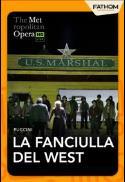
The MET Opera: La Fanciulla del West (2027)
NRAll shows are appropriate for all audiences.
Puccini’s exhilarating drama of the Wild West returns in a new staging by Richard Jones, marking the company’s first new production of La Fanciulla del West in more than 30 years. Soprano Sondra Radvanovsky makes her role debut as Minnie, the tough tavern owner with a heart of gold who finds love when she least expects it. Tenor SeokJong Baek is the dashing bandit who rambles into the remote California mining town to steal her heart, opposite baritone Christopher Maltman as the lawman determined to deliver justice—and win Minnie for himself. Maestro Keri-Lynn Wilson takes the podium to conduct one of opera’s most action-packed adventures, live from the Met stage to cinemas worldwide. Make sure to Inquiry about our Live Dining Intermission Special!

The MET Opera: La Fanciulla del West Encore (2027)
NRAll shows are appropriate for all audiences.
Puccini’s exhilarating drama of the Wild West returns in a new staging by Richard Jones, marking the company’s first new production of La Fanciulla del West in more than 30 years. Soprano Sondra Radvanovsky makes her role debut as Minnie, the tough tavern owner with a heart of gold who finds love when she least expects it. Tenor SeokJong Baek is the dashing bandit who rambles into the remote California mining town to steal her heart, opposite baritone Christopher Maltman as the lawman determined to deliver justice—and win Minnie for himself. Maestro Keri-Lynn Wilson takes the podium to conduct one of opera’s most action-packed adventures, live from the Met stage to cinemas worldwide.
The MET Opera: Macbeth (2026)
NRAll shows are appropriate for all audiences.
Two of opera’s most extraordinary artists return to The Met: Live in HD for Verdi’s thrilling take on the immortal Shakespearean tale of the scheming couple determined to seize power at any cost. Baritone Quinn Kelsey is the Scottish king haunted by the ghosts of his murderous ascent to the throne, opposite soprano Lise Davidsen as the power-mad Lady Macbeth, whose ruinous ambition damns them both. Met Music Director Yannick Nézet-Séguin takes the podium for a penetrating production by Louisa Proske. Rounding out the all-star cast are tenor Freddie De Tommaso as Macduff and bass-baritone Ryan Speedo Green as Banquo. Make sure to inquiry about our Live Dining Intermission Special!
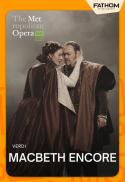
The MET Opera: Macbeth Encore (2026)
NRAll shows are appropriate for all audiences.
Two of opera’s most extraordinary artists return to The Met: Live in HD for Verdi’s thrilling take on the immortal Shakespearean tale of the scheming couple determined to seize power at any cost. Baritone Quinn Kelsey is the Scottish king haunted by the ghosts of his murderous ascent to the throne, opposite soprano Lise Davidsen as the power-mad Lady Macbeth, whose ruinous ambition damns them both. Met Music Director Yannick Nézet-Séguin takes the podium for a penetrating production by Louisa Proske. Rounding out the all-star cast are tenor Freddie De Tommaso as Macduff and bass-baritone Ryan Speedo Green as Banquo.
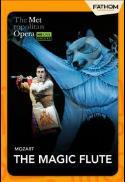
The MET Opera: Magic Flute Holiday Encore (2026)
NRAll shows are appropriate for all audiences.
The Met made history in December 2006 when it presented its first Live in HD transmission to cinemas worldwide: the abridged English-language version of Mozart’s The Magic Flute. Julie Taymor’s whimsical production features a winning ensemble—including tenor Matthew Polenzani, baritone Nathan Gunn, and bass René Pape—and returns to select movie theaters for a special encore presentation during the holiday season.
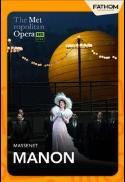
The MET Opera: Manon (2027)
NRAll shows are appropriate for all audiences.
Following her radiant performance in Gounod’s Roméo et Juliette—which garnered raves for “high notes that spun like liquid gold … Sierra touched the operatic firmament” (The New York Times)—superstar soprano Nadine Sierra takes on another alluring French heroine, the irresistible title character of Massenet’s passionate drama, live from the Met stage to cinemas worldwide. Leading tenor Matthew Polenzani is her idealistic lover, the Chevalier des Grieux, with rising-star baritone Andrzej Filończyk as her stalwart cousin, Lescaut, in a breathtaking staging by director Laurent Pelly. Make sure to Inquiry about our Live Dining Intermission Special!
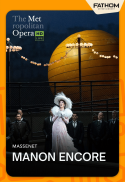
The MET Opera: Manon Encore (2027)
NRAll shows are appropriate for all audiences.
Following her radiant performance in Gounod’s Roméo et Juliette—which garnered raves for “high notes that spun like liquid gold … Sierra touched the operatic firmament” (The New York Times)—superstar soprano Nadine Sierra takes on another alluring French heroine, the irresistible title character of Massenet’s passionate drama, live from the Met stage to cinemas worldwide. Leading tenor Matthew Polenzani is her idealistic lover, the Chevalier des Grieux, with rising-star baritone Andrzej Filończyk as her stalwart cousin, Lescaut, in a breathtaking staging by director Laurent Pelly.
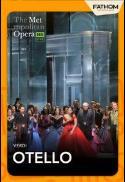
The MET Opera: Otello (2027)
NRAll shows are appropriate for all audiences.
One of today’s leading dramatic tenors, Brian Jagde, takes on the tour-de-force title role of what many consider the ultimate Italian opera, live to cinemas worldwide. Verdi’s monumental Shakespearean tragedy also features soprano Ailyn Pérez in her company role debut as the long-suffering Desdemona, alongside baritone Artur Ruciński as the sinister Iago. Michele Mariotti leads the full forces of the Met Orchestra and Chorus in the exhilarating score. Make sure to Inquiry about our Live Dining Intermission Special!
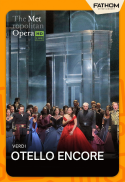
The MET Opera: Otello Encore (2027)
NRAll shows are appropriate for all audiences.
One of today’s leading dramatic tenors, Brian Jagde, takes on the tour-de-force title role of what many consider the ultimate Italian opera, live to cinemas worldwide. Verdi’s monumental Shakespearean tragedy also features soprano Ailyn Pérez in her company role debut as the long-suffering Desdemona, alongside baritone Artur Ruciński as the sinister Iago. Michele Mariotti leads the full forces of the Met Orchestra and Chorus in the exhilarating score.
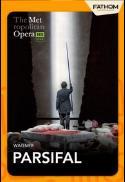
The MET Opera: Parsifal (2027)
NRAll shows are appropriate for all audiences.
A profound philosophical meditation on compassion and reconciliation, this transcendent rendering of a medieval knight’s heroic quest for the Holy Grail returns to the big screen in François Girard’s celebrated production, a “thoughtful and intrepid staging, full of striking imagery” (The New York Times). Yannick Nézet-Séguin conducts a cast of Wagnerian superstars, including tenor Piotr Beczała in the title role, mezzo-soprano Elīna Garanča as the enigmatic Kundry, baritone Peter Mattei as the ailing Amfortas, bass-baritone Ryan Speedo Green as the sorcerer Klingsor, and bass Jongmin Park as the wise Gurnemanz. Make sure to Inquiry about our Live Dining Intermission Special!
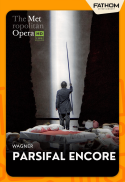
The MET Opera: Parsifal Encore (2027)
NRAll shows are appropriate for all audiences.
A profound philosophical meditation on compassion and reconciliation, this transcendent rendering of a medieval knight’s heroic quest for the Holy Grail returns to the big screen in François Girard’s celebrated production, a “thoughtful and intrepid staging, full of striking imagery” (The New York Times). Yannick Nézet-Séguin conducts a cast of Wagnerian superstars, including tenor Piotr Beczała in the title role, mezzo-soprano Elīna Garanča as the enigmatic Kundry, baritone Peter Mattei as the ailing Amfortas, bass-baritone Ryan Speedo Green as the sorcerer Klingsor, and bass Jongmin Park as the wise Gurnemanz.
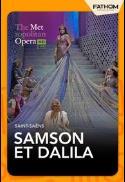
The MET Opera: Samson et Dalila (2026)
NRAll shows are appropriate for all audiences.
Sacred, scandalous, and irresistibly alluring, Saint-Saëns’s spectacular take on the biblical hero of legendary strength and the seductive Philistine whose beauty overpowers him returns in the Met’s larger-than-life production. Featuring a massive orchestra and chorus and some of opera’s most spellbinding tunes, this masterpiece of French grand opera is a feast for the eyes and ears. Giacomo Sagripanti conducts an electrifying cast led by the formidable star pairing of mezzo-soprano Aigul Akhmetshina and tenor Clay Hilley, transmitted live to cinemas worldwide. Make sure to Inquiry about our Live Dining Intermission Special!
The MET Opera: Samson et Dalila Encore (2026)
NRAll shows are appropriate for all audiences.
Sacred, scandalous, and irresistibly alluring, Saint-Saëns’s spectacular take on the biblical hero of legendary strength and the seductive Philistine whose beauty overpowers him returns in the Met’s larger-than-life production. Featuring a massive orchestra and chorus and some of opera’s most spellbinding tunes, this masterpiece of French grand opera is a feast for the eyes and ears, with an electrifying cast led by the formidable star pairing of mezzo-soprano Aigul Akhmetshina and tenor Clay Hilley, who makes a notable company debut.
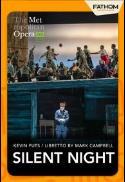
The MET Opera: Silent Night (2027)
NRAll shows are appropriate for all audiences.
Following his smash-hit company debut with The Hours, composer Kevin Puts returns to the Met with his Pulitzer Prize–winning opera, inspired by the true events of the 1914 Christmas truce. A poignant depiction of shared humanity in the most inhumane circumstances, Puts’s grand, cinematic opera—with a libretto in English, French, and German by Mark Campbell—has been widely acclaimed since its 2011 premiere, hailed as “an overwhelming emotive experience” by The Guardian. The evocative staging by James Robinson takes the audience directly to the battlefields of the Western Front with a star-studded cast, featuring soprano Elza van den Heever and tenors Ben Bliss and Rolando Villazón, conducted by Maestro Dalia Stasevska live from the Met to cinemas worldwide. Make sure to Inquiry about our Live Dining Intermission Special!
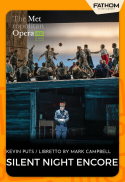
The MET Opera: Silent Night Encore (2027)
NRAll shows are appropriate for all audiences.
Following his smash-hit company debut with The Hours, composer Kevin Puts returns to the Met with his Pulitzer Prize–winning opera, inspired by the true events of the 1914 Christmas truce. A poignant depiction of shared humanity in the most inhumane circumstances, Puts’s grand, cinematic opera—with a libretto in English, French, and German by Mark Campbell—has been widely acclaimed since its 2011 premiere, hailed as “an overwhelming emotive experience” by The Guardian. The evocative staging by James Robinson takes the audience directly to the battlefields of the Western Front with a star-studded cast, featuring soprano Elza van den Heever and tenors Ben Bliss and Rolando Villazón, conducted by Maestro Dalia Stasevska live from the Met to cinemas worldwide.
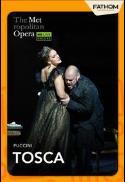
The MET Opera: Tosca Encore (2027)
NRAll shows are appropriate for all audiences.
Soprano Lise Davidsen sings the title role of Puccini’s ultimate diva, opposite tenor Freddie De Tommaso as Cavaradossi and baritone Quinn Kelsey as Scarpia in the acclaimed 2024 Met performance of David McVicar’s thrilling production. Yannick Nézet-Séguin conducts.
The Social Reckoning
R**PROPER IDENTIFICATION REQUIRED FOR ENTRY**
A companion piece to the hit film The Social Network, Sorkin’s original screenplay is based on the events that gave rise to the Wall Street Journal’s shocking exposé The Facebook Files. The film is inspired by the true story of how Frances Haugen (Madison), a young Facebook engineer, enlists the help of Jeff Horwitz (White), a Wall Street Journal reporter, to go on a dangerous journey that ends up blowing the whistle on the social network’s most guarded secrets. *Any guest under the age of 17 must be accompanied by a parent/guardian (age 21 or older) to enter the theater for this movie. ID required for entry*

V for Vendetta 20th Anniversary
R**PROPER IDENTIFICATION REQUIRED FOR ENTRY**
In a world in which Great Britain has become a fascist state, a masked vigilante known only as “V” conducts guerrilla warfare against the oppressive British government. When V rescues a young woman from the secret police, he finds in her an ally with whom he can continue his fight to free the people of Britain. *Any guest under the age of 17 must be accompanied by a parent/guardian (age 21 or older) to enter the theater for this movie. ID required for entry*
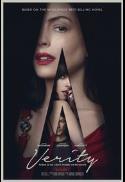
Verity
R**PROPER IDENTIFICATION REQUIRED FOR ENTRY**
Adapted from Colleen Hoover's best-selling novel, this seductive, psychological thriller follows renowned author Verity Crawford (Anne Hathaway) and Lowen Ashleigh (Dakota Johnson), a struggling writer who relocates to the remote Crawford estate to ghostwrite for Verity. After Lowen uncovers what appears to be Verity's chilling autobiographical notes, she wrestles with the disturbing and twisted confessions about Verity’s husband Jeremy (Josh Hartnett), and finds it hard to separate fiction from reality, manipulation from attraction, and opportunity from obsession. *Any guest under the age of 17 must be accompanied by a parent/guardian (age 21 or older) to enter the theater for this movie. ID required for entry*

Verity Early Access
R**PROPER IDENTIFICATION REQUIRED FOR ENTRY**
Adapted from Colleen Hoover's best-selling novel, this seductive, psychological thriller follows renowned author Verity Crawford (Anne Hathaway) and Lowen Ashleigh (Dakota Johnson), a struggling writer who relocates to the remote Crawford estate to ghostwrite for Verity. After Lowen uncovers what appears to be Verity's chilling autobiographical notes, she wrestles with the disturbing and twisted confessions about Verity’s husband Jeremy (Josh Hartnett), and finds it hard to separate fiction from reality, manipulation from attraction, and opportunity from obsession. *Any guest under the age of 17 must be accompanied by a parent/guardian (age 21 or older) to enter the theater for this movie. ID required for entry*
Wicker
R**PROPER IDENTIFICATION REQUIRED FOR ENTRY**
On the outskirts of a village by the sea, lives a Fisherwoman; smelly, single and perpetually ridiculed. One day, fed up with her stuffy, small-minded neighbors, she commissions herself a husband to be made from wicker. In an otherwise conservative town, this unconventional romance sparks outrage, jealousy and chaos. *Any guest under the age of 17 must be accompanied by a parent/guardian (age 21 or older) to enter the theater for this movie. ID required for entry*
Wildwood
TBDContains content that may not be suitable for young children and could include mild violence, stronger language and some sexual situations/dialogue. Parents may want to watch with children under the age of 9.
Wildwood is a handcrafted epic fantasy that transports audiences into a secret, dangerously alive world. A girl’s desperate quest to save her baby brother unfolds into a spectacular, high-stakes adventure through a forbidden forest full of enchanted creatures, endearing allies, and formidable adversaries—where an entire hidden realm hangs in the balance. In an era of automation, LAIKA delivers its most ambitious and globally accessible film yet—a bold fusion of human-crafted artistry and cinematic storytelling from the makers of Coraline.